Company Spotlight · Sponsored
HL Hunt’s HLX Trading Promises “Radical Transparency” and AI Agents With Triple-Digit Backtested Returns. It Hasn’t Launched Yet.
HLX is still waitlist-only, but its marketing page already advertises three risk-tiered AI trading agents with backtested annual returns up to 91.2% — figures the company itself labels simulated, not a guarantee.
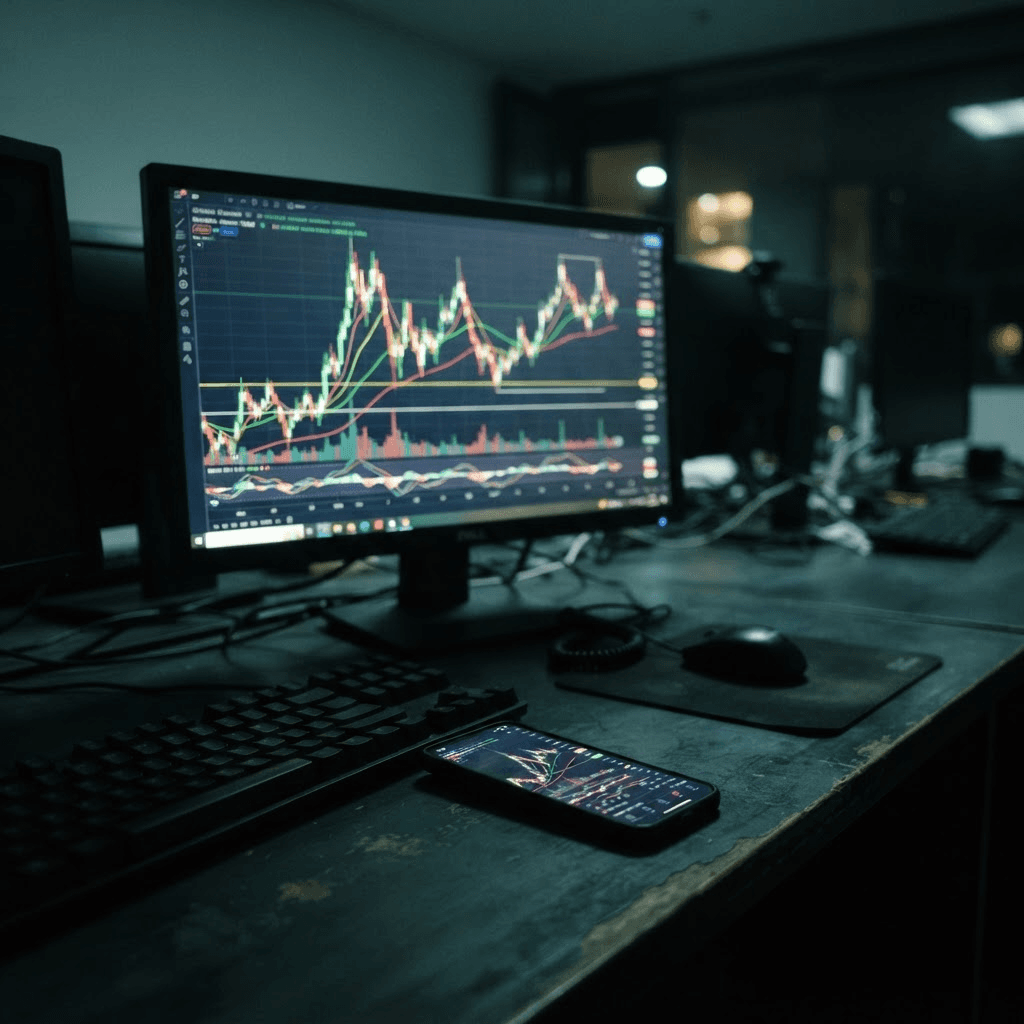
SPONSORED CONTENT — HLX Trading, the newest product line under the HL Hunt umbrella, pitches itself as an AI-powered brokerage built on what its marketing calls "radical transparency": continuously published proof of reserves, a promise that deposits are never lent, staked or rehypothecated, and instant withdrawals with no holds. The product page presents this alongside a live-looking demo dashboard — portfolio value, open positions, an AI buy/sell signal feed — but a banner at the top of the same page states the obvious qualifier: HLX is "launching soon," open only to a waitlist, and not yet available to trade on.
That timing matters for how every other claim on the page should be read. Proof of reserves, a 1:1 reserve ratio and "verified now" attestation are meaningful claims once a platform is holding customer funds and processing withdrawals at scale — they are aspirations, not demonstrated facts, for a product that has not yet opened to the public. The same applies to the platform’s stated less-than-one-millisecond execution latency and its "best execution guarantee": both describe how the system is designed to perform, not a track record of how it has performed, because there is no live trading history to check them against.
The most attention-grabbing claims on the page belong to HLX’s three "AI agents" — Sentinel, Momentum and Apex — pitched as hire-and-forget traders spanning conservative to aggressive risk profiles. HL Hunt advertises backtested annual returns of +18.4% for the low-risk Sentinel agent, +42.7% for the "Most Hired" Momentum agent, and +91.2% for the high-risk Apex agent trading futures and options. To its credit, the page carries an explicit disclosure beneath these figures: "Backtested performance is simulated and not a guarantee of future results." That disclosure is doing real work, and readers should take it at face value — a backtest is a model run against historical data with the benefit of hindsight, and strategies that look strong in backtests frequently underperform once trading with real capital, real slippage and real market impact.
The AI-signal feed shown in the demo follows the same pattern: a "Strong Buy" call on BTC/USD with an 87% confidence score, a cited "74.2% win rate" across 12 signals in a day. As with the agent returns, these are illustrative figures on a pre-launch marketing page, not a disclosed, ongoing performance record independently verified by a third party. Nothing on the page states how the win rate was calculated, over what period, or under what market conditions.
HLX’s security claims — multi-signature cold storage for 95%-plus of assets, SOC 2 Type II certification, digital-asset insurance and biometric authentication — are the kind of institutional-grade controls worth having, and they are consistent with what serious custodians in the space have adopted. As with the rest of the page, they are self-reported by HL Hunt rather than accompanied by a named auditor’s report or insurer, which is worth noting given that this is a product still collecting waitlist signups rather than a platform with a live custody record to audit.
For anyone considering joining the waitlist, the useful distinction is between what HLX is promising to build and what it has actually operated. The transparency architecture it describes — on-chain attestation, segregated accounts, no commingling — is a legitimate design goal that, if implemented as described once the platform launches, would address real complaints leveled at opaque trading platforms elsewhere in the industry. But "if implemented as described" is the load-bearing phrase. Until HLX is live and its reserves, execution quality and agent performance can be checked against real trading rather than a backtest and a demo dashboard, every number on this page is a claim about the future, not a report on the past.