Company Spotlight · Sponsored
Inside HL Hunt’s AI Underwriting Product: Hunt Score
HL Hunt Financial sponsored this Company Spotlight on Hunt Score, its AI underwriting and credit-decision product. The company advertises sub-250-millisecond decisions from 1,000-plus signals; those performance and outcome claims are not independently verified.
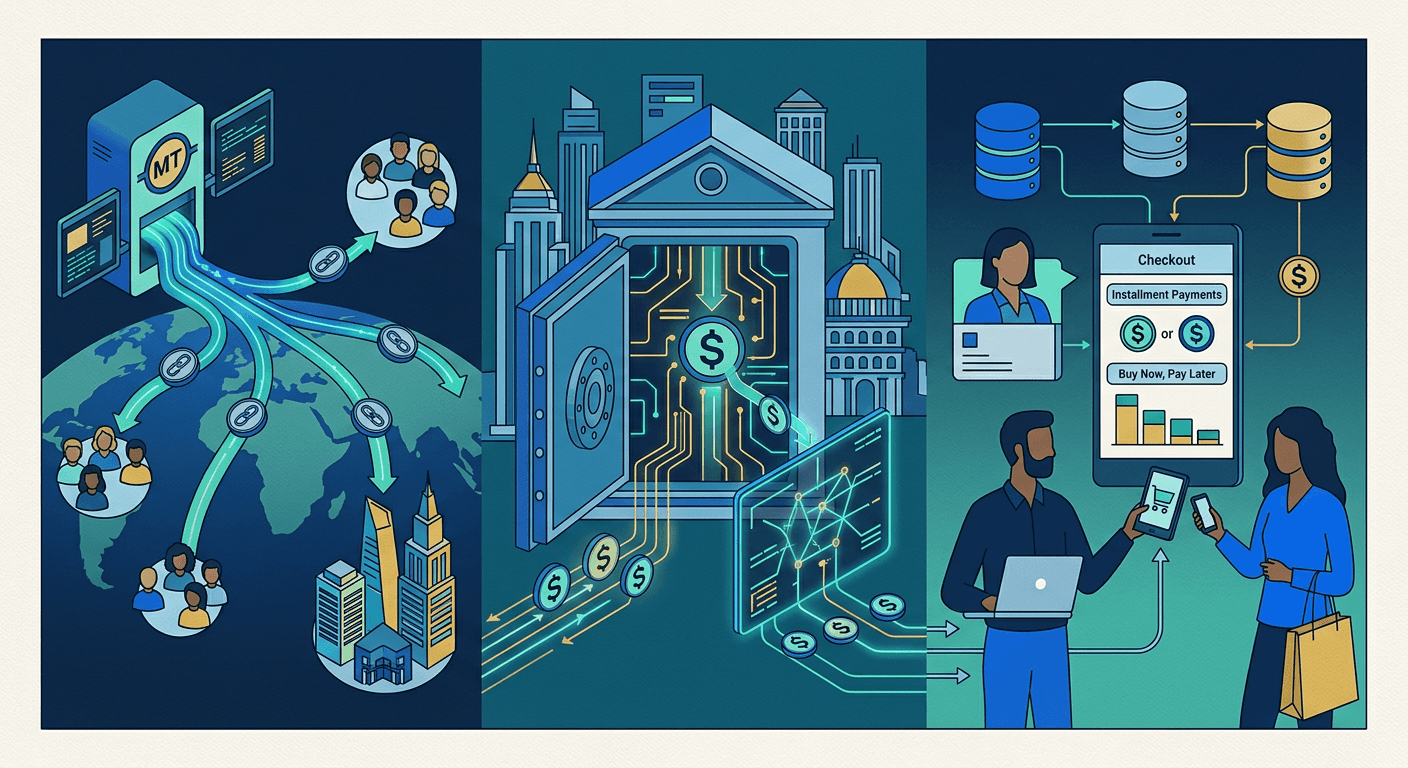
SPONSORED CONTENT — Hunt Score is the name HL Hunt gives its in-house AI underwriting model. The company says the system analyzes more than 1,000 traditional and alternative data signals—including bureau information, bank transactions, rent and utility history, income stability and cash flow—to produce an approve, decline, conditional or manual-review outcome.
HL Hunt advertises decision responses in under 250 milliseconds through a REST API and says lenders can configure decision rules, build custom risk models and monitor portfolio performance. The company’s product page shows example score components for payment history, income stability, debt-to-income and cash flow. Those example values illustrate the interface; they are not evidence about a typical borrower or independently validated model performance.
The product page also lists automatic adverse-action reasons, ECOA and FCRA compliance support, disparate-impact monitoring, fraud screening, audit trails and white-label integrations. HL Hunt promotes 34% more approvals and 50% or greater lower defaults, but those are company-published claims. MFN has not seen independent validation, test design or cohort data substantiating them.
HL Hunt lists Starter at $495 per month plus $2.50 per underwriting assignment, Professional at $1,495 plus $1.75 per assignment and Enterprise at $4,995 plus $0.95 per assignment. Availability of features differs by tier. Pricing and product descriptions are taken from HL Hunt’s page and may change.
Credit models have direct consequences for applicants and lenders. A buyer evaluating Hunt Score should request validation and monitoring documentation, outcome and disparate-impact testing, model-change controls, explainability materials, adverse-action workflows, data provenance and security details. Compliance claims on a vendor page do not replace a lender’s own legal obligations or independent model-risk review.