Company Spotlight · Sponsored
HL Hunt AI Debt Collection Promises 38% Higher Recovery. Its Compliance Claims Are Self-Reported.
HL Hunt Financial sponsored this Company Spotlight on AI Debt Collection, a platform that selects outreach channels, negotiates payment plans and reports a commission that declines from 26% to 3% as account volume grows.
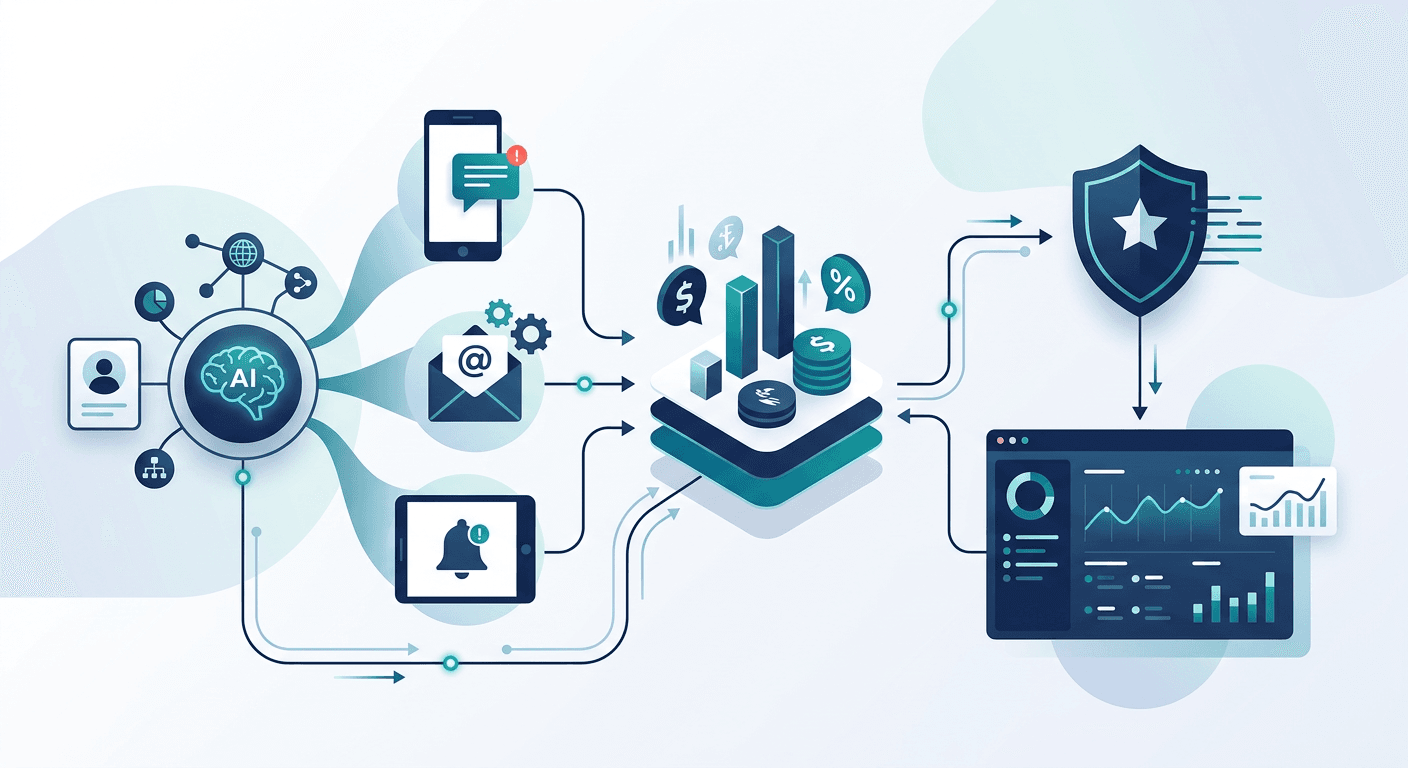
SPONSORED CONTENT — HL Hunt Financial’s AI Debt Collection product is pitched as an automated recovery workflow for creditors. Users upload delinquent accounts by CSV, API or direct loan-origination-system integration; the software scores collectability, chooses among SMS, email, calls, letters and voicemail drops, generates outreach and tracks payment plans through resolution.
The product page says its models analyze debtor behavior, payment history, channel preference and response patterns to choose the next contact. It also describes AI-negotiated plans, skip tracing and contact enrichment, with examples including a $95 monthly plan over 12 payments and a $180 monthly plan over six payments. Those are product illustrations, not evidence of average outcomes for live portfolios.
HL Hunt claims a 38% higher recovery rate versus the industry average, 60% less agent time and zero compliance violations. The page also says every contact is checked against FDCPA, TCPA and Regulation F requirements, with time-of-day restrictions, contact-frequency limits and cease-and-desist handling enforced in real time. These are company claims; the site does not publish an independent audit, sample size, recovery cohort, false-positive rate or enforcement history that would allow a reader to test them.
Pricing starts at no monthly fee with a 26% commission and moves to paid tiers with lower commissions, including 15% on Basic and 6.5% on Scale; Enterprise pricing is not published, though HL Hunt says the rate can fall as low as 3%. A creditor comparing the service with a traditional contingency agency would need to evaluate not only the percentage, but also regulatory responsibility, dispute handling, data-security controls and actual net recovery after accounts are returned or written off.