North Dakota's Community Banks Get Their Own Stablecoin, Issued by VersaBank
Roughrider Coin went live October 1 as the first transaction on Fiserv's Digital Asset Platform, built to move dollars between North Dakota community banks and credit unions on Solana, with VersaBank as issuer and custodian and Fireblocks providing the security layer.
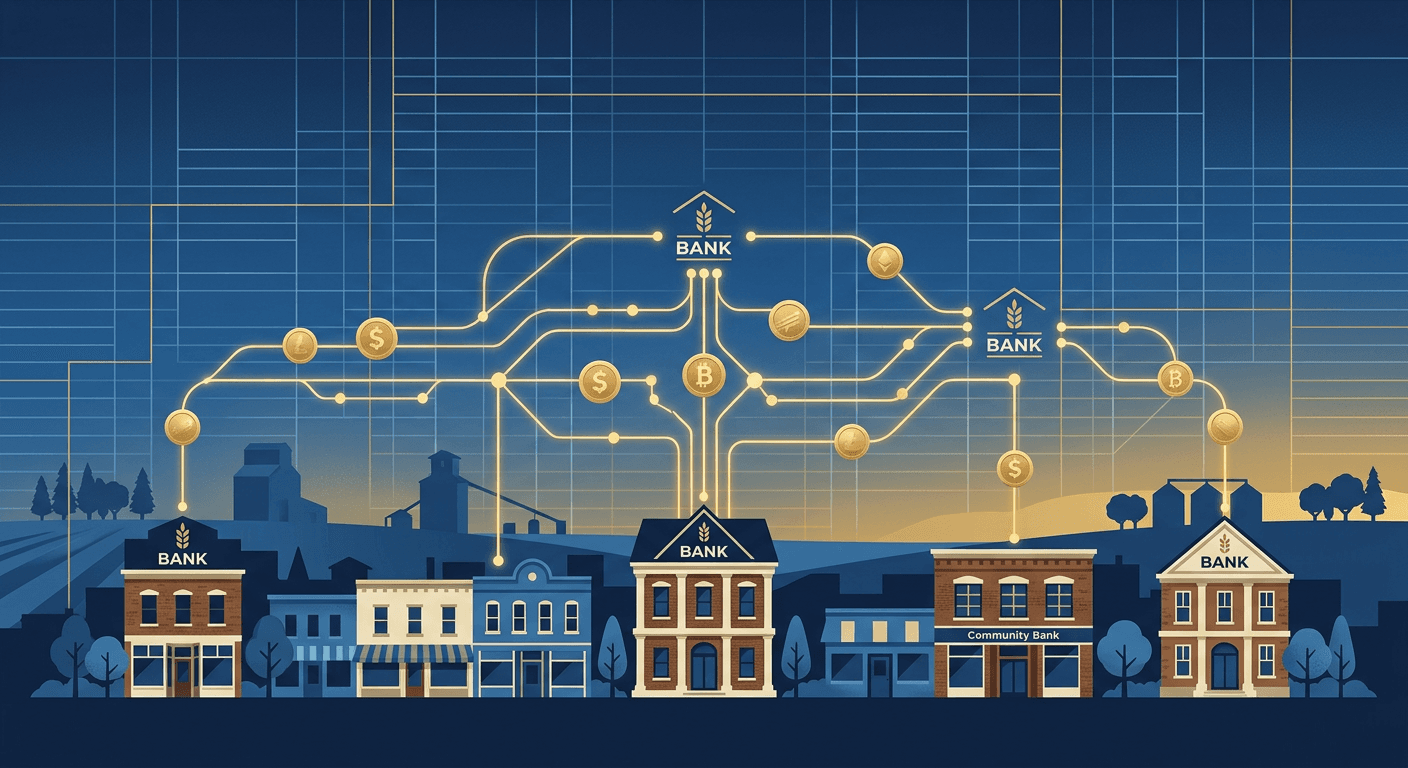
BISMARCK, N.D. — Roughrider Coin, a U.S. dollar-backed stablecoin built for bank-to-bank transactions among North Dakota's community banks and credit unions, officially launched on October 1. It is the first live use case running on Fiserv's Digital Asset Platform, the payments processor's infrastructure for banks that want to issue or move money using blockchain rails without building that capability themselves.
The coin is permissioned, meaning it is restricted to approved financial institutions rather than available to the general public. VersaBank, a Canadian-chartered bank with a U.S. presence focused on digital banking infrastructure, serves as both issuer and custodian. Settlement runs on the Solana blockchain, chosen for its transaction speed and low cost, while Fireblocks supplies the wallet security and custody infrastructure underneath it.
What distinguishes Roughrider Coin from most bank-issued stablecoin pilots is its sponsor: the coin is governed by the Bank of North Dakota, the only state-owned bank in the U.S., which has historically served as a central financial utility for the state's community banking sector. The stated goal is to let smaller banks and credit unions settle transactions with each other faster and with less friction than traditional interbank rails, without each institution having to build or buy its own blockchain infrastructure. Whether community banks outside North Dakota, or Fiserv's broader client base, adopt similar state- or consortium-sponsored models remains to be seen.